


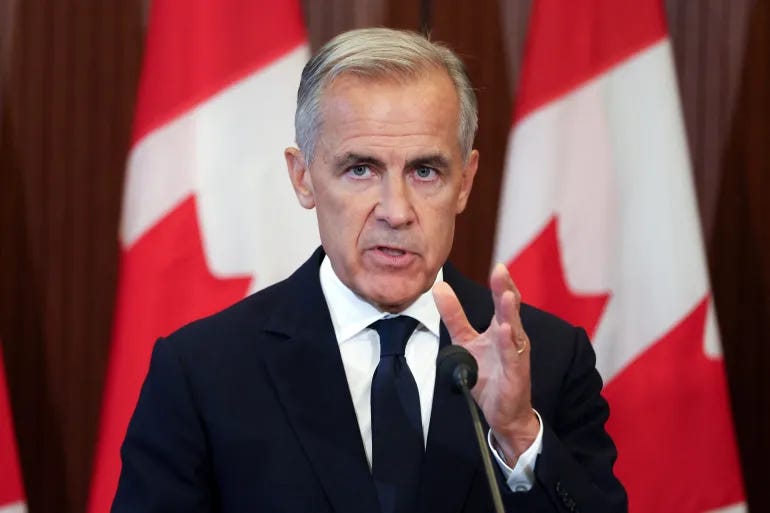
After a week where a potential positive outcome to negotiations was in sight, Mark Carney declared he had suspended negotiations due to last-minute modifications that were, according to him, “unfair, unprofitable, and called into question the reliability of any agreement.” Faced with the immediate imposition of 50% tariffs by the United States, Canada says it wants to retaliate “dollar for dollar.”
As a reminder, the new tariff crisis, triggered by the United States in July, comes following a long series of American and Canadian actions. The Americans, more specifically, the U.S. president, had kicked off his term at full throttle by declaring his willingness to subjugate Canada so that it would become the 51st state. This outcry, which brought the Liberal Party of Canada to power, led to a heated exchange between the two nations. One can think of Doug Ford’s advertisement, widely circulated in the United States, which derailed negotiations in late 2025.
The affected sectors are the automotive, aluminum, steel, and softwood lumber sectors. These sectors, dominated by multinationals, are the main pawns in these negotiations, with the Americans likely wanting to repatriate a good portion of processing and manufacturing, and with that, bring back Canada closer to the resource colony it once was. Smaller businesses in these fields are definitely the most prone to closure if no alternative is found. It will take major national projects and a radical change in the way we do things to hope to survive the troubled times on the horizon.
Uncertain economic impact
Will the Canadian economy, on life support for decades, survive this new setback? Nothing is less clear. An economy kept afloat by interventionist governments, companies that no longer innovate, a non-existent startup investment system, all metrics indicate a potentially very dark future for the Canadian economy. Major projects could potentially save the day on a technical level, certainly. But it is clear that the foundations would remain the same. It is undeniable that a major crisis is necessary in order to change entrepreneurial and governmental mindsets.
Perhaps we will see a new, dynamic, and strong Canadian economy emerge from the ashes of this crisis. Or perhaps Canada will return to it’s original form: a resource colony.